The Enlightenment of Lord Buddha: A Journey to Spiritual Awakening
The story of Lord Buddha’s enlightenment, known as the “Bodhi” or “awakening,” is one of the most profound and transformative events in the history of humanity. Siddhartha Gautama, who would later become the Buddha, embarked on a spiritual journey that led him to attain enlightenment under the Bodhi tree in Bodh Gaya, India, over 2,500 years ago. This event marked the birth of Buddhism, a religion that continues to inspire and guide millions of followers worldwide.
The Life of Siddhartha Gautama(Lord Buddha)
Siddhartha Gautama was born into a noble family in the 6th century BCE in Lumbini, in Nepal. Despite being sheltered from the harsh realities of the world, he couldn’t escape the universal truths of suffering, old age, sickness, and death. These experiences led him to question the meaning of life and seek answers to the fundamental human predicament.
The Great Renunciation
At the age of 29, Siddhartha left his luxurious life behind, renouncing his princely title and becoming a wandering ascetic. He sought wisdom from various spiritual teachers and practiced extreme asceticism for six years, hoping to find the path to liberation from suffering. However, despite his rigorous efforts, he felt no closer to the truth.

The Middle Path
Realizing that neither self-indulgence nor extreme deprivation provided the answer, Siddhartha decided to follow the “Middle Path” – a balanced approach between indulgence and self-mortification. This path emphasized the cultivation of inner peace and wisdom through meditation and mindfulness.
The Enlightenment Under the Bodhi Tree
At the age of 35, Siddhartha decided to meditate under the Bodhi tree in Bodh Gaya until he found the truth he sought. On a full moon night, after several days of intense meditation, he entered profound states of concentration. It was during these deep meditative states that he experienced the Four Noble Truths and the realization of the “Noble Eightfold Path” – the core principles of Buddhism.
The Four Noble Truths
- Dukkha: The truth of suffering – the recognition that life is inherently filled with dissatisfaction and suffering.
- Samudaya: The origin of suffering – the understanding that attachment and desire are the root causes of suffering.
- Nirodha: The cessation of suffering – the realization that by eliminating desires, one can attain liberation from suffering.
- Magga: The path to the cessation of suffering – the Noble Eightfold Path, which outlines the steps to achieve enlightenment.
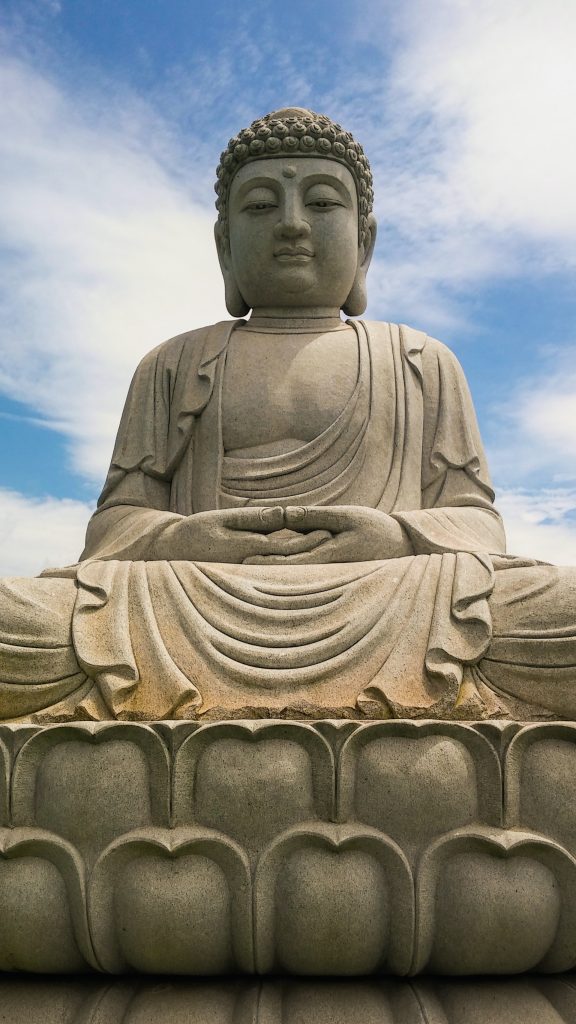
The Noble Eightfold Path
1.Right View: Understanding the Four Noble Truths.
Right View is a fundamental aspect of the Noble Eightfold Path in Buddhism, encompassing an accurate comprehension of the Four Noble Truths. These truths are the realities of suffering (dukkha), its origin (samudaya), its cessation (nirodha), and the path leading to its cessation (magga). Right View acknowledges the impermanence and unsatisfactoriness of existence, recognizing that desires and attachments are the root causes of suffering. Through understanding these truths, individuals gain insight into the nature of reality, leading them to adopt ethical conduct, mental discipline, and wisdom, thus progressing towards liberation from suffering and attaining enlightenment.
2.Right Intention: Committing to a noble and compassionate outlook.
Right Intention is a key element of the Noble Eightfold Path in Buddhism, emphasizing the commitment to a noble and compassionate outlook. It involves cultivating intentions free from harmful thoughts or actions, such as renouncing greed, hatred, and cruelty, while fostering kindness, empathy, and goodwill towards all beings. By developing these positive intentions, practitioners strive to create a mindset aligned with the path to enlightenment, fostering harmony and reducing suffering. Right Intention complements Right View, guiding individuals towards a virtuous and ethical life, essential for attaining spiritual growth and liberation from the cycle of suffering (samsara).
3.Right Speech: Abstaining from false, divisive, harsh, or idle speech.
Right Speech is a crucial aspect of the Noble Eightfold Path in Buddhism, advocating abstaining from false, divisive, harsh, or idle speech. It emphasizes the cultivation of truthful, compassionate, and beneficial communication. Practitioners should refrain from lying, gossiping, and using hurtful language. Instead, they should promote understanding, harmony, and empathy through their words. Right Speech encourages mindful communication that fosters respect, builds trust, and contributes positively to relationships and society. By being mindful of their speech, individuals promote a peaceful and ethical environment, supporting their spiritual development and paving the way towards liberation from suffering.
4.Right Action: Living ethically and morally.
Right Action is a vital component of the Noble Eightfold Path in Buddhism, advocating living ethically and morally. It entails refraining from actions that cause harm to oneself or others, such as killing, stealing, and engaging in sexual misconduct. Instead, practitioners cultivate actions that promote kindness, honesty, and compassion. Right Action emphasizes the importance of ethical conduct, acknowledging that our actions have consequences and can impact our spiritual journey. By living in accordance with these principles, individuals create a foundation of virtuous behavior, fostering personal growth, and contributing to a more harmonious and compassionate society.

5.Right Livelihood: Engaging in a livelihood that doesn’t harm others.
Right Livelihood is an integral aspect of the Noble Eightfold Path in Buddhism, advocating engaging in a livelihood that does not harm others. It involves choosing a profession or occupation that aligns with ethical and compassionate principles, avoiding activities that cause suffering, such as dealing in weapons, intoxicants, or exploitative trades. Right Livelihood promotes earning a living through honest means, respecting others’ well-being, and contributing positively to society. By pursuing a livelihood that is in harmony with these values, individuals foster inner peace, cultivate a sense of purpose, and contribute to a more just and compassionate world.
6.Right Effort: Cultivating positive qualities and abandoning negativity.
Right Effort is a core component of the Noble Eightfold Path in Buddhism, emphasizing the cultivation of positive qualities and the abandonment of negativity. It involves exerting conscious effort to develop virtues like loving-kindness, compassion, and wisdom while renouncing harmful tendencies such as greed, hatred, and ignorance. Right Effort encourages the moderation of desires and the diligent pursuit of spiritual growth. Practitioners strive to maintain mindfulness, identifying unwholesome thoughts and transforming them into positive ones. By nurturing constructive habits and purifying the mind, individuals progress towards inner transformation, enlightenment, and the alleviation of suffering for themselves and others.
7.Right Mindfulness: Being aware of one’s thoughts, feelings, and actions.
Right Mindfulness is a key element of the Noble Eightfold Path in Buddhism, emphasizing the practice of being fully present and aware of one’s thoughts, feelings, and actions without judgment or attachment. It involves cultivating moment-to-moment awareness of the mind, body, and surroundings, fostering a deeper understanding of oneself and the impermanent nature of reality. Through mindfulness, individuals observe their experiences without being consumed by them, reducing reactivity and enhancing emotional intelligence. By staying attentive to the present moment, practitioners develop clarity, wisdom, and a profound connection to life, facilitating personal growth and the path towards liberation from suffering.

8.Right Concentration: Developing deep states of meditative absorption.
Right Concentration is a vital aspect of the Noble Eightfold Path in Buddhism, focusing on the development of deep states of meditative absorption. It involves refining the mind’s stability and concentration through systematic meditation practices. By cultivating one-pointed attention, practitioners can attain various levels of concentration known as jhanas, leading to profound mental clarity and tranquility. Right Concentration complements other path factors, facilitating the path towards enlightenment. Through sustained mental focus and equanimity, individuals gradually overcome distractions and attachments, ultimately experiencing profound insights into the nature of reality and transcending suffering, leading to a liberated and enlightened state of mind.
The Impact of Enlightenment
Following his enlightenment, Siddhartha Gautama became the Buddha, meaning “the awakened one.” He spent the rest of his life traveling, teaching, and sharing his insights with people from all walks of life. His teachings, known as the Dharma, offered a path to liberation and freedom from suffering, and his community of followers, the Sangha, grew steadily.